
Barbie… Barbie Horseback Riding was one of the very first games I played on our Play Station 2 (PS2) console. I remember we did have a Play Station 1 (PS1) but I couldn’t really remember any games I played on it. My parents also got us a GameBoy and I could even remember that sometimes you had to blow on the game cartridge when the game wouldn’t work.
Though I don’t necessarily call myself a gamer, I’ve had my fair share of playing. I’ve also been that person who spends the entire game playing on the console, bathe-less and sometimes foodless. This is why the book of Jane McGonigal caught my attention—Reality is Broken: Why Games Make Us Better and How They Can Change the World.
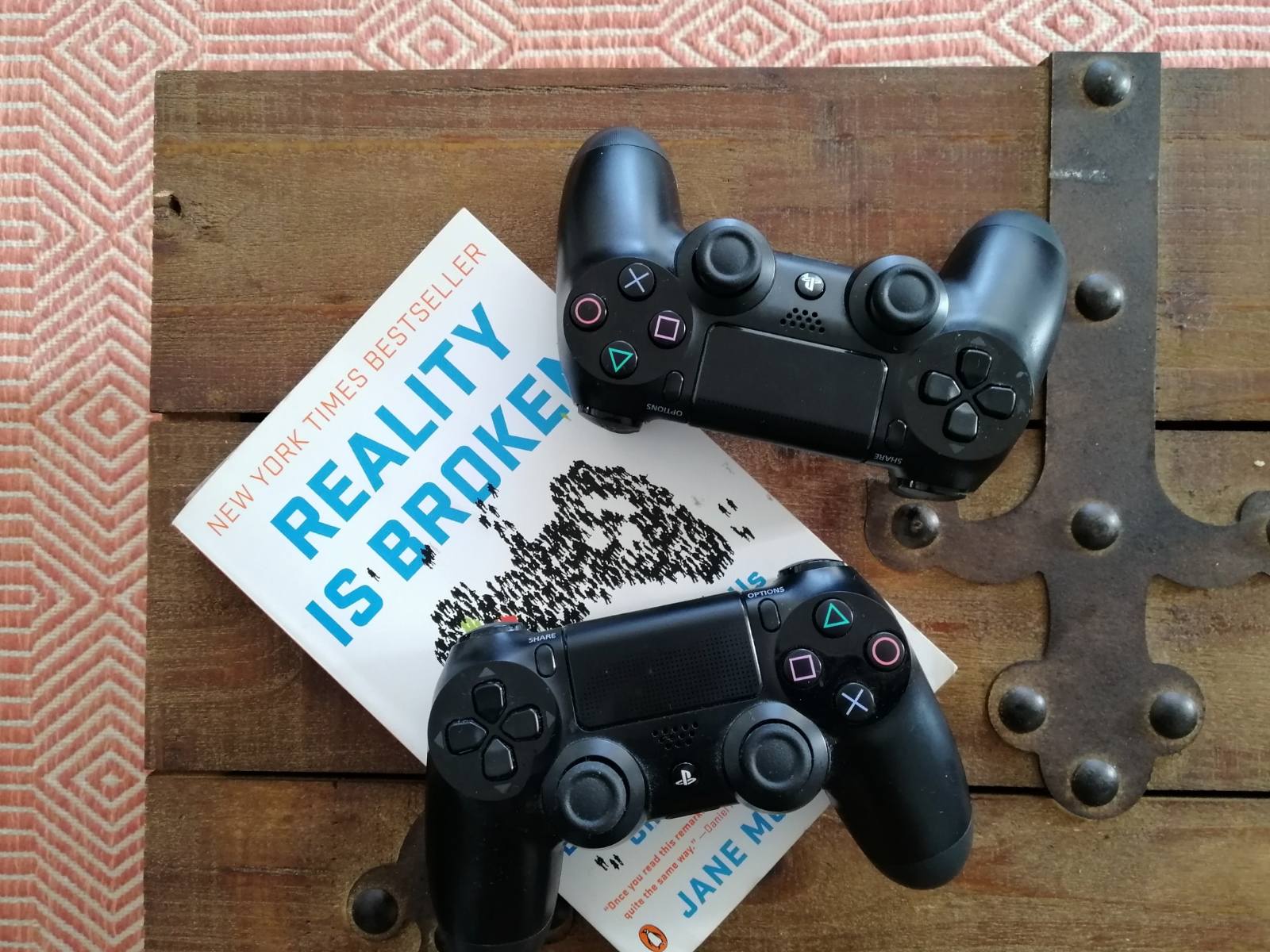
Even just while reading the introduction of the book, you could already get the strong gamer voice and tone of the author. You could feel her passion for the industry.
The book had three main components: why games make us happy, reinventing reality and how very big games can change the world. But there are three concepts that struck me the most: how she put the reader in the eyes of someone who works in the gaming industry, the emotions we undervalue when playing games, and the impact of games in our everyday lives.
In the eyes of a Gaming professional
I like applying the need to be happy in every aspect of my life—family, friends and work. I was raised by my parents to choose a profession I’d be happy in, and that I wouldn’t regret doing. I’m saying this because Interactive Media wasn’t really on the top of my mind when I first got a job after my undergraduate degree—I was 19 years old when I graduated; like any typical person around this age, I had no idea what I wanted to do professionally.
Four (4) years later, though already exposed in the field of User Experience (UX) and Marketing, I still have no idea what specific industry I want to hop onto. However, I would be lying if I said I never thought of working in the gaming industry. I have basic skills in digital arts and very minimal knowledge in coding—but it always amazed me how games worked. How do you code a game? What is the backend stuff? How do you link an image, an illustration, a 3D model to code? How do you even make a first-person shooter walk?
I actually support McGonigal in her statement, “game developers know better than anyone else how to inspire extreme effort and reward hard work.” Personally, I sometimes find coding an extreme pain—what more for people who embed code into graphics to make them jump, run, shoot, fight …?
I think when she was referring to the extreme effort and rewarding hard work, she wanted to emphasize the happiness that people in the gaming industry feel once they’ve successfully launched a new one—that feeling of developing something that you treat as your ‘baby’. I may not be the developer, but there is a tiny little girl in me that does wish to become part of game development in any way I possibly could. I think being in the gaming industry need a lot of hard work, that I am really willing to go through.
Which brings us to eustress—a term she opened that I feel is underappreciated. Eustress is basically positive stress. She said, “During eustress, we aren’t experiencing fear or pessimism. We’ve generated the stressful situation on purpose, so we’re confident and optimistic.” I think applying this thought to working every day is important for us to cope with being tired.
Through the eyes of a game developer, the stress would all be worth it because they have a clear goal at the end of each tiring day. And I want every professional in the interactive media industry to take in this concept:
It may be stressful, but if you really care for what you’re doing professionally, then you should be having fun with it—make it worthwhile.
The gaming industry is part of the interactive media industry anyway, in the first place. You cannot develop a game without putting the users first—because understanding what gamers want is the core to developing a good game.
The emotions we undervalue when we’re playing games
Aside from eustress, there were a lot of underrated human emotions brought up by the author—but let’s talk about Fiero, flow, gamer regret, and happiness.
According to the author, Fiero is the Italian ford for pride. She said that scientists have recently documented that Fiero is one of the most powerful neurochemical highs we can experience. Applying this to us: in our creative industry, we’re expected to be proud of what we do, of the products we release—especially that we made it specifically to meet user needs. I think in one point or another, it’s a common feeling that professionals have felt.
From my understanding, “flow” is that actual emotion you feel when you’ve accomplished something you worked really hard for. The author said that flow wasn’t supposed to come easy, and games made it possible to experience it almost immediately. We don’t commonly see or understand this emotion because we’re too dived deep into the stress (or eustress) that we feel during the process.
She also introduced an emotion called “gamer regret.” To sum it up, it’s mainly the feeling of wondering that perhaps, because of gaming, they’re missing out on life. People need a wake-up call and need to realize that time spent on things you think you like may actually be a waste in the end.
Another heavily talked about emotion is happiness—rather, the opposite which is depression. I absolutely adored her for saying that “the opposite of play isn’t work. It’s depression.”
Exposed to work at the age of 19, a lot of people treated me as a kid in the company. I don’t really blame them—I had to prove myself first, right? But even when work got really serious, I would still run and “play” around. I tried to make every move that I have happy. I hated meetings where people are all so stoic. I tried my best to make every step fun despite it being serious. I hated having to act stoic. I think and I want people to breathe in this question: is it so wrong to be happy all the time? Being happy doesn’t mean you’re not being serious with your work.
I think any professional should feel these emotions at least once in the career(s). I want to emphasize that:
You can work seriously, and still have fun with it. Our industry can become so exhausting, like any, but you need to put and do your passion with and in the right emotions—or else you may regret years spent in this industry.
“When we do hard work that we care about, we are priming our minds for happiness,” McGonigal said. “There are many ways to be happy, but we cannot find happiness.” We have to do it.
The impact of games in our everyday lives
I have almost 50 games on my phone alone. I love the thrill, challenge, and Fiero I feel when I play games.
I remember when our dog died, I got so depressed. I would think of the actual scenarios and just remind myself of how painful it was. I needed to distract myself because I would literally cry out of nowhere if I didn’t. I kept playing 2418 to distract myself—which is why I will never uninstall this game. But imagine the impact that it had for me to cope and not cry in public—games really are underappreciated.
Gameplay is an escapist act. It is what she calls “a retreat from reality.” As professionals from this industry, we should be able to understand what a user can do to escape reality if s/he wants to.
“There’s something essentially unique about the way games structure experience”—and as people from this industry:
You should be able to find that unique experience for the user. Remember that we are here to make their lives bearable and to satisfy their needs. Make the best impact—the same way gameplay does to its users.
 KSY, MDEI | YOUR FULL-STACK PRODUCT SPECIALIST
Leave a comment