

2025 / Business Planning, Feasibility Study, Feature Scoping, Presentation Design
Role:
Researcher / Lead Designer
2025 (2 months)
- Conducted feasibility research on Airbnb’s technical infrastructure
- Conducted tech stack evaluation and feature risk mapping
- Scoped features aligned with business goals
- Designed deliverables on Google Docs and presentation on Canva.com
- Collaborated with team on concept selection and strategy
- Presented final deck with team using Canva
Tools:
Canva / Google Docs / The Internet
About the Project
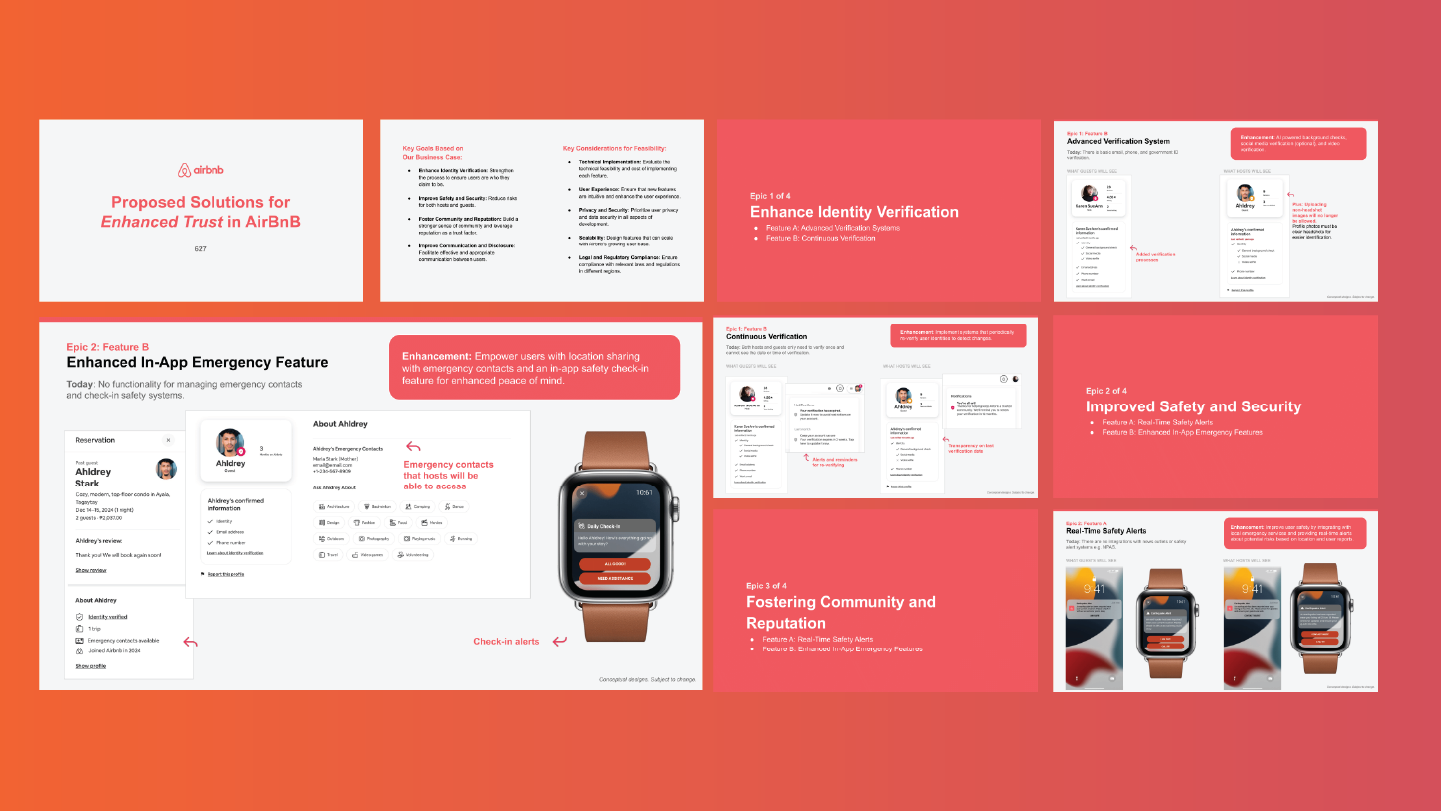
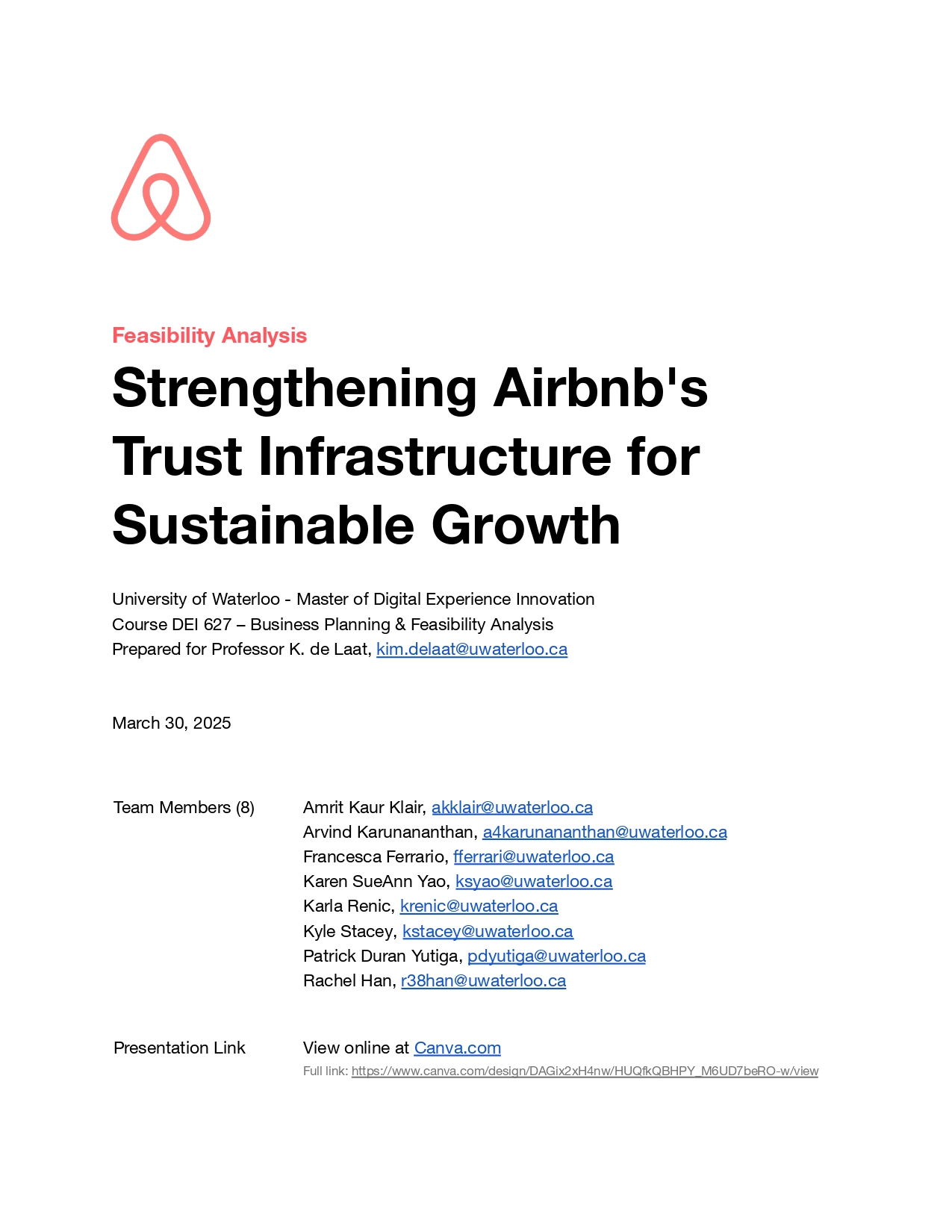
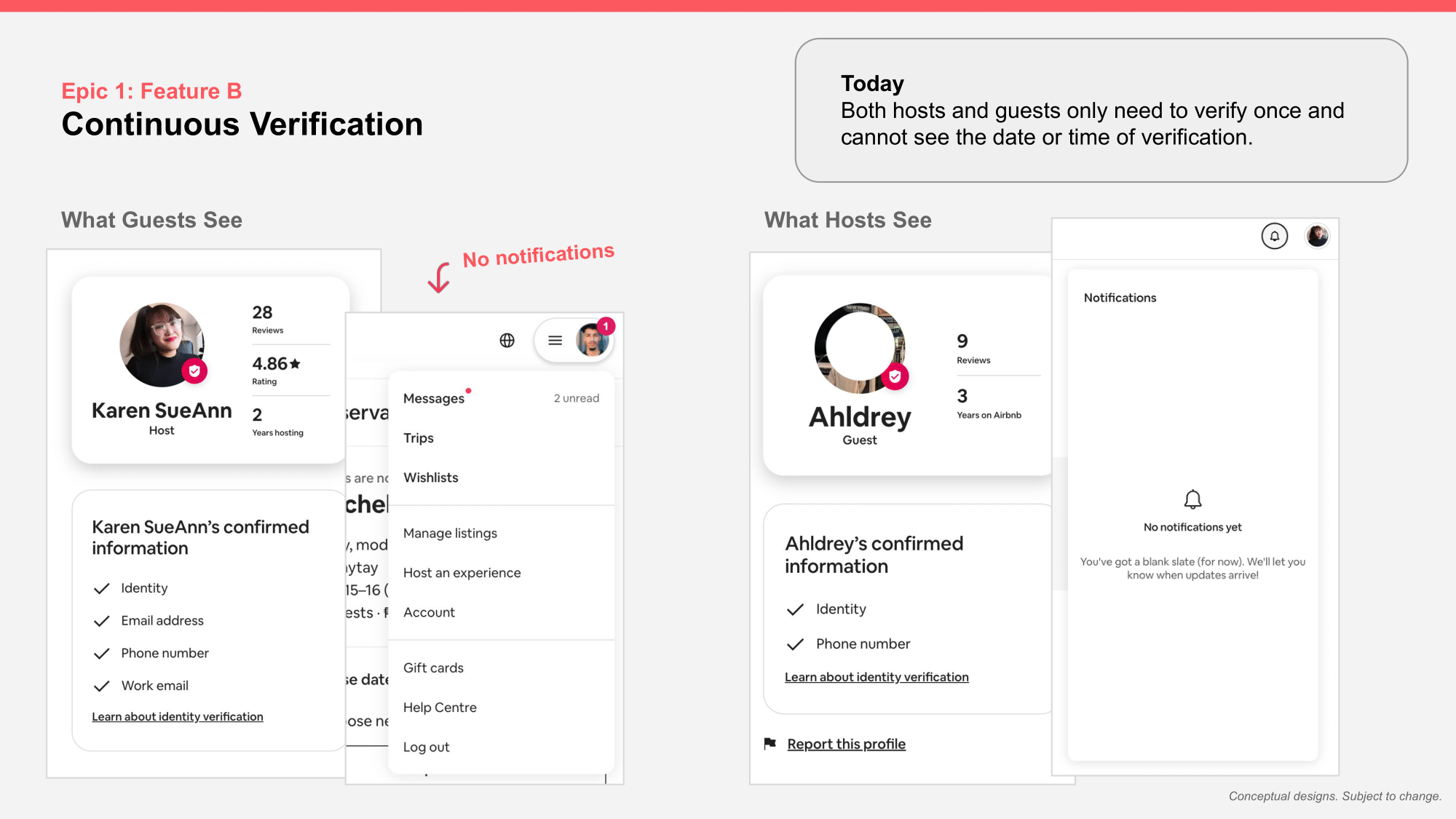
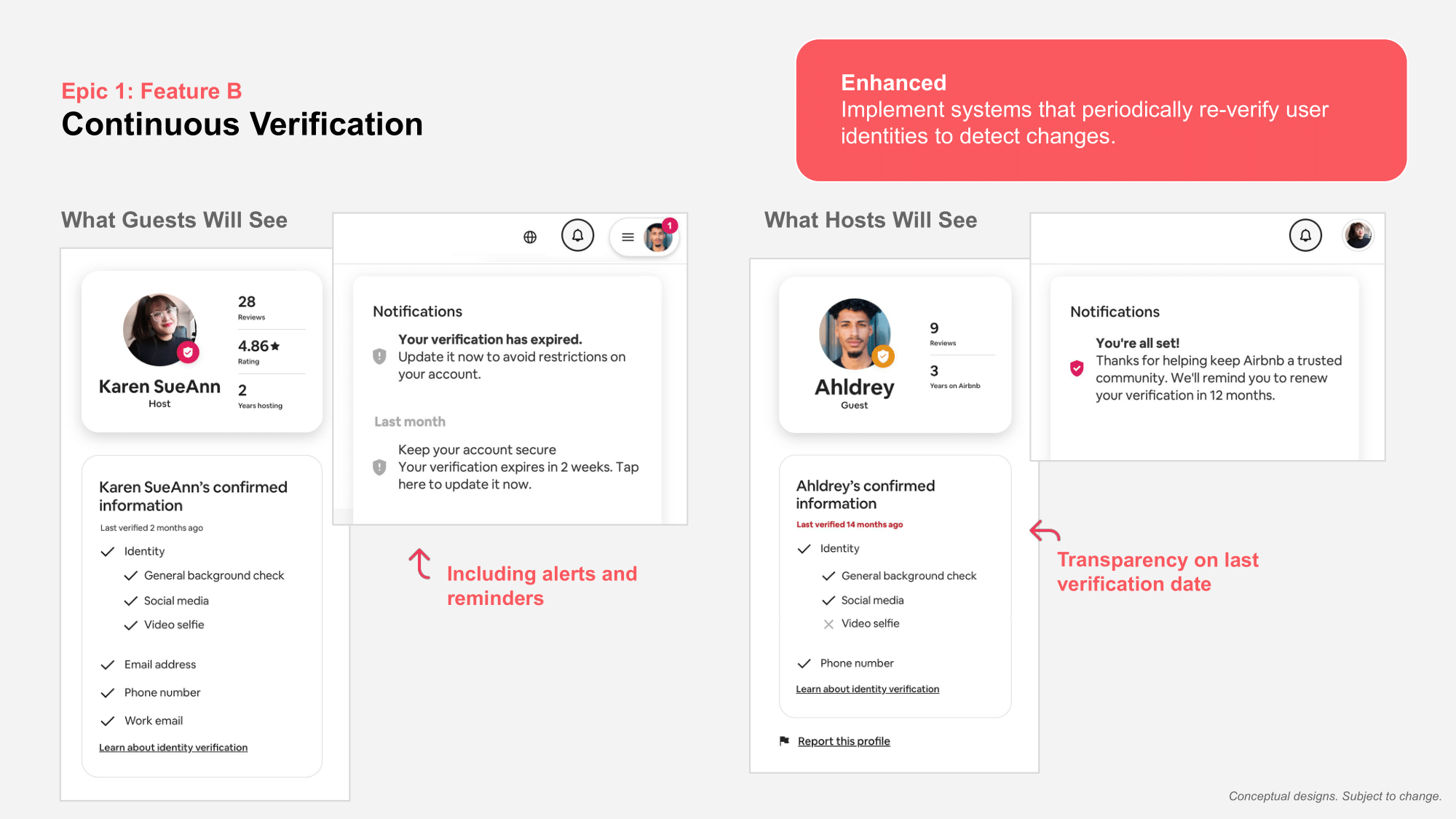
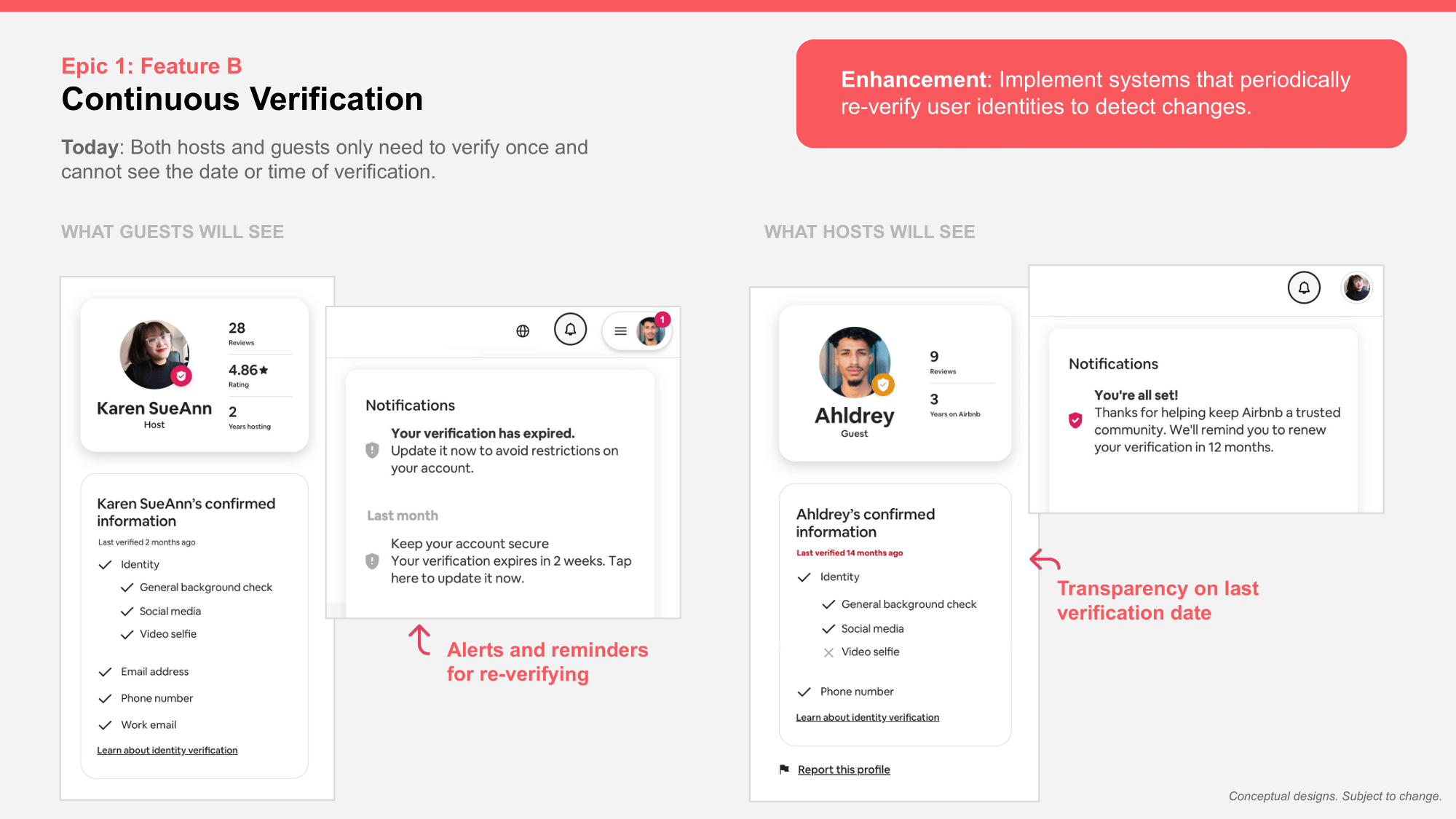
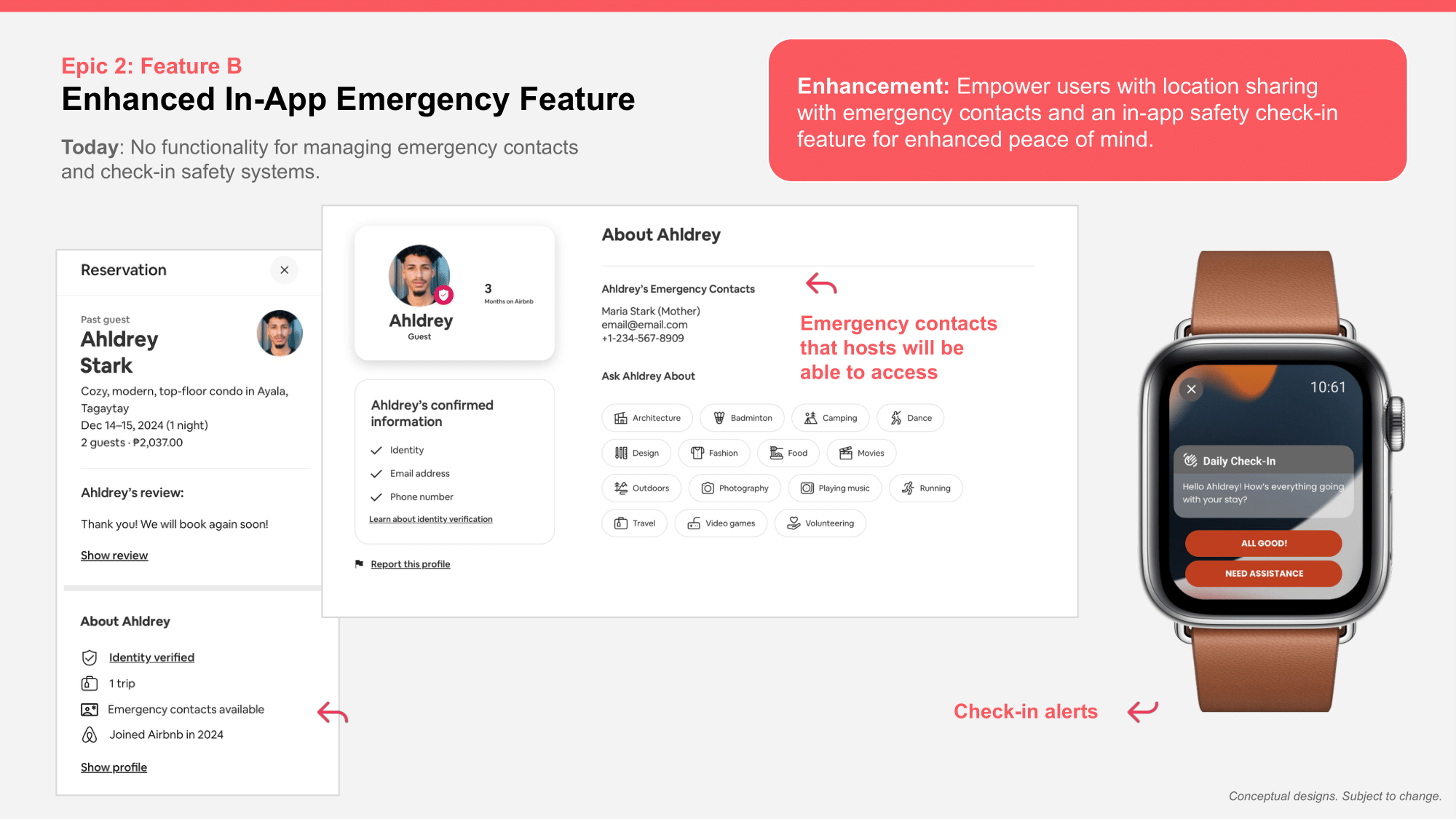
Trust is at the heart of Airbnb’s business model—and a key driver of repeat bookings, guest satisfaction, and platform growth. Our team was tasked with evaluating a proposed Trust Enhancement Plan that introduced identity verification upgrades, safety features, and transparency improvements to better connect hosts and guests.
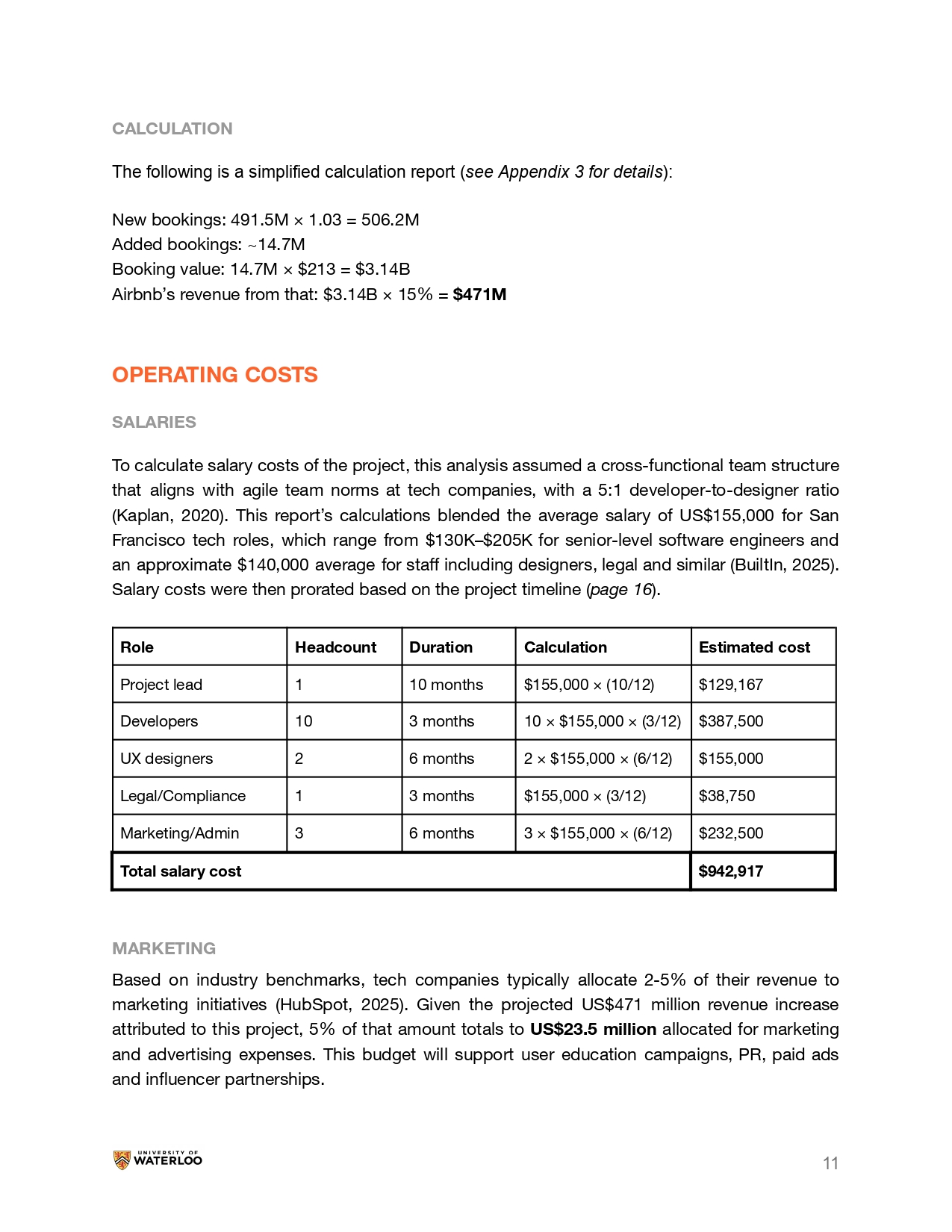
Through a comprehensive feasibility analysis (market, tech, financial, and organizational), we aimed to determine if these features were realistic, impactful, and worth prioritizing. Our selected concept projected a 3% increase in bookings and a potential $471 million revenue lift. The plan was structured into a 10-month phased rollout, with early wins expected through advanced verification and in-app safety tools.
This is an academic project for the Master of Digital Experience Innovation (MDEI) program at the University of Waterloo Stratford School of Interaction Design and Business, owned and designed by a team of graduate students.


Behind-the-scenes
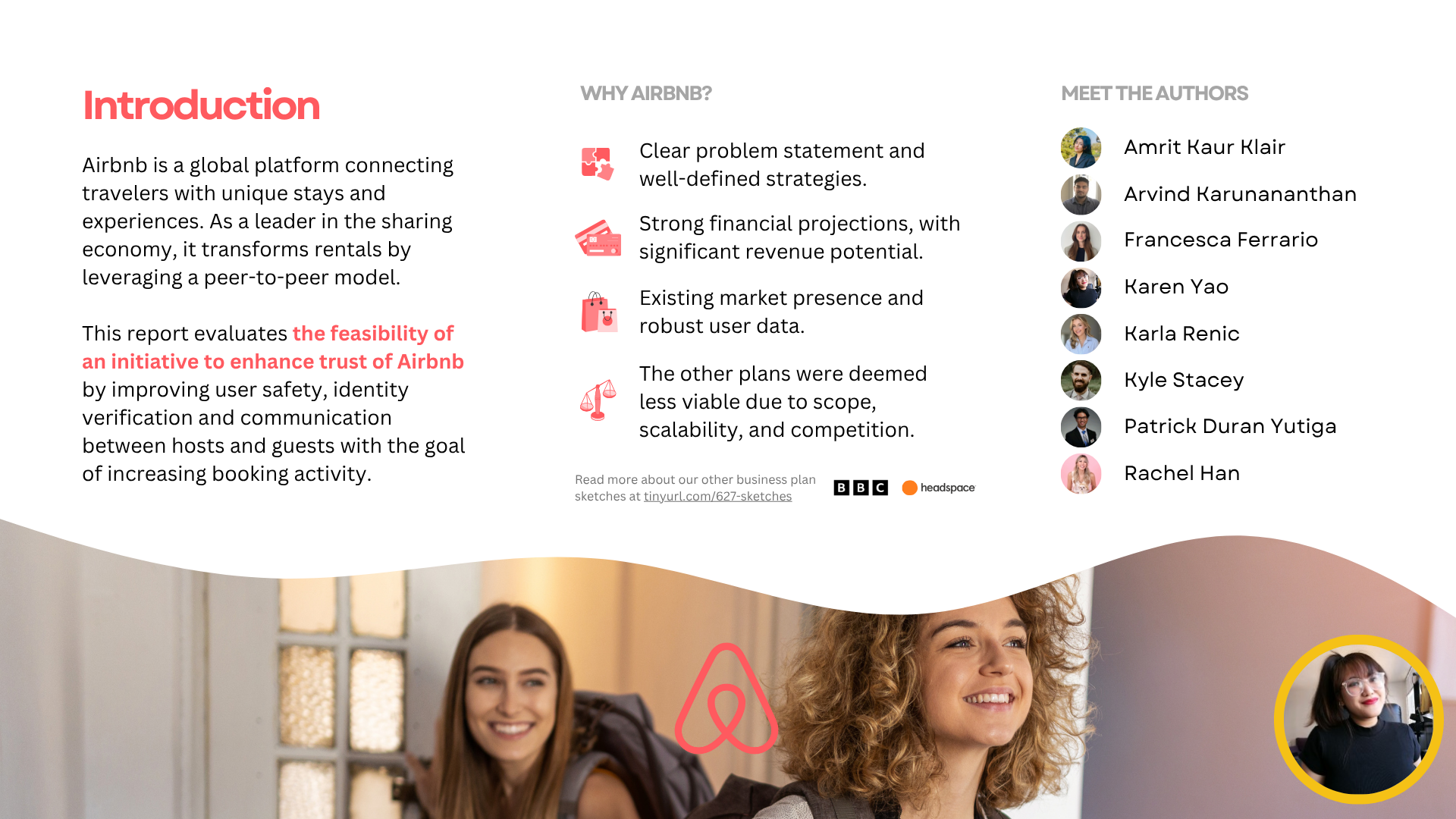
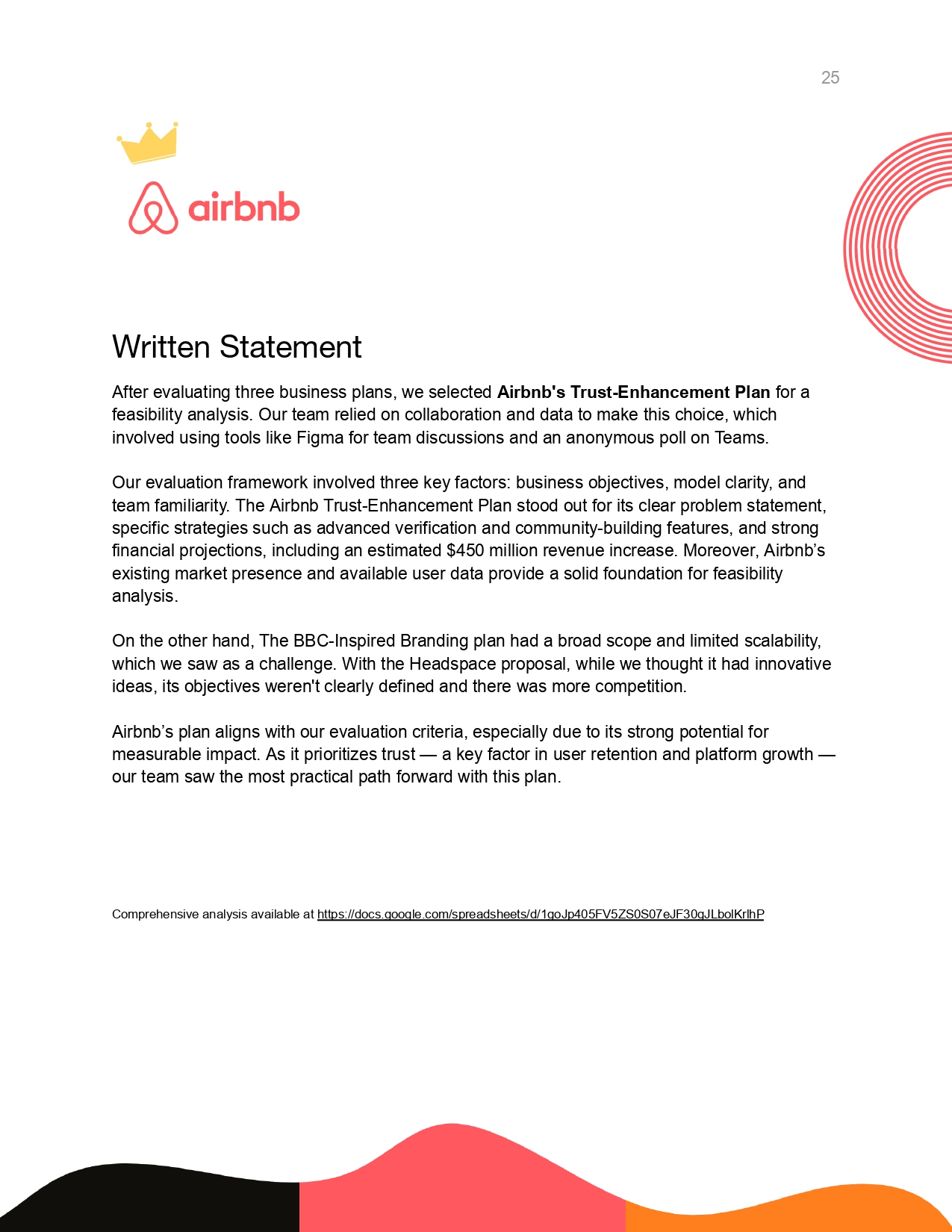
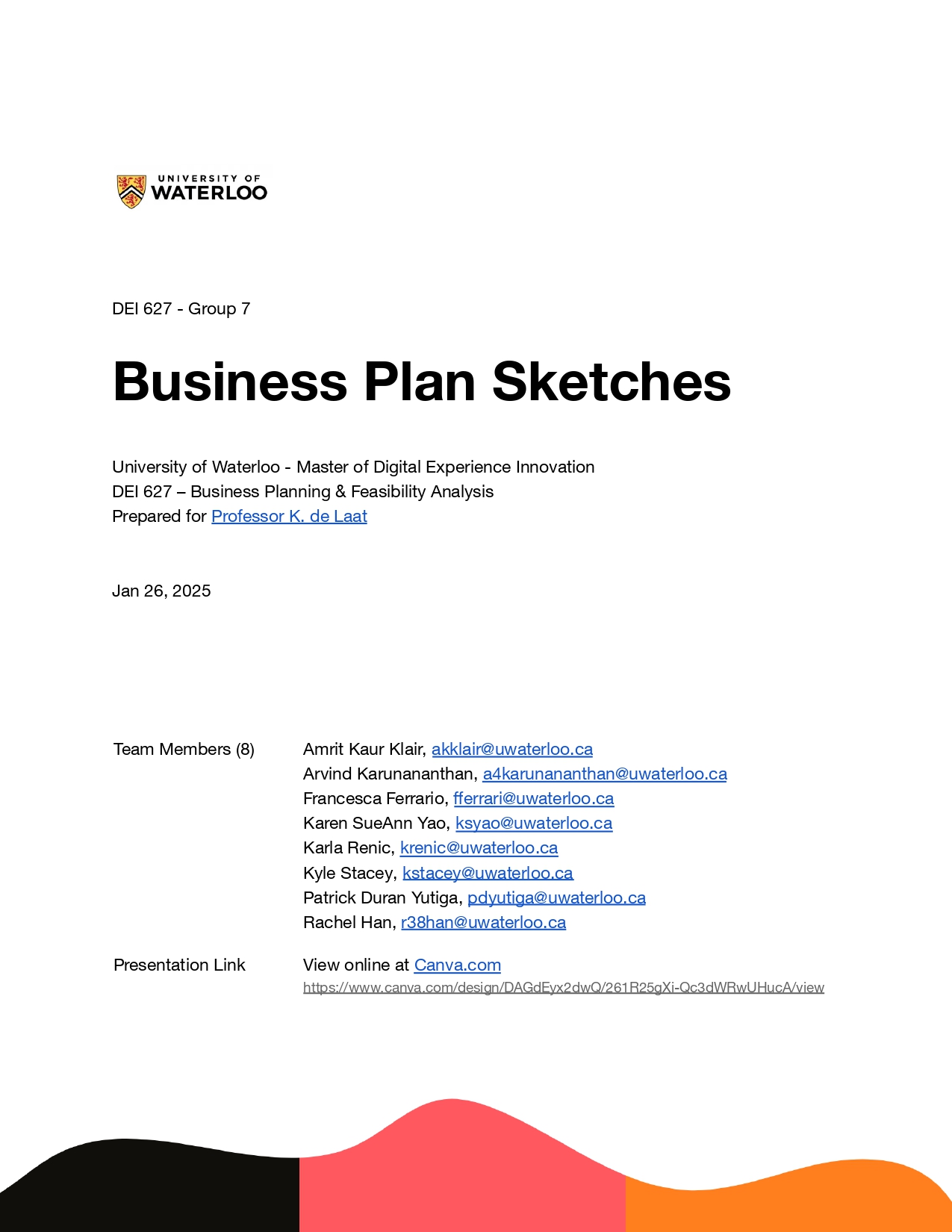
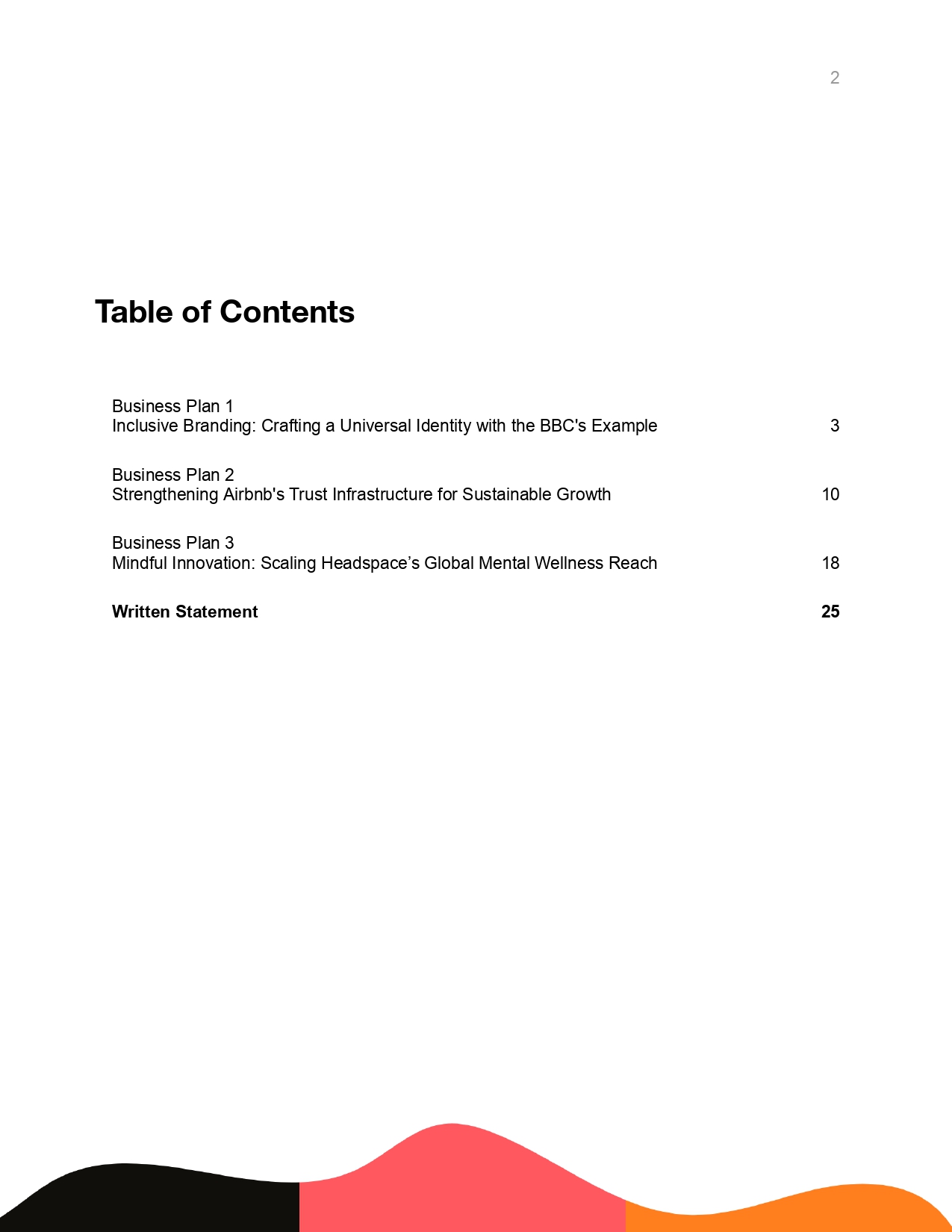
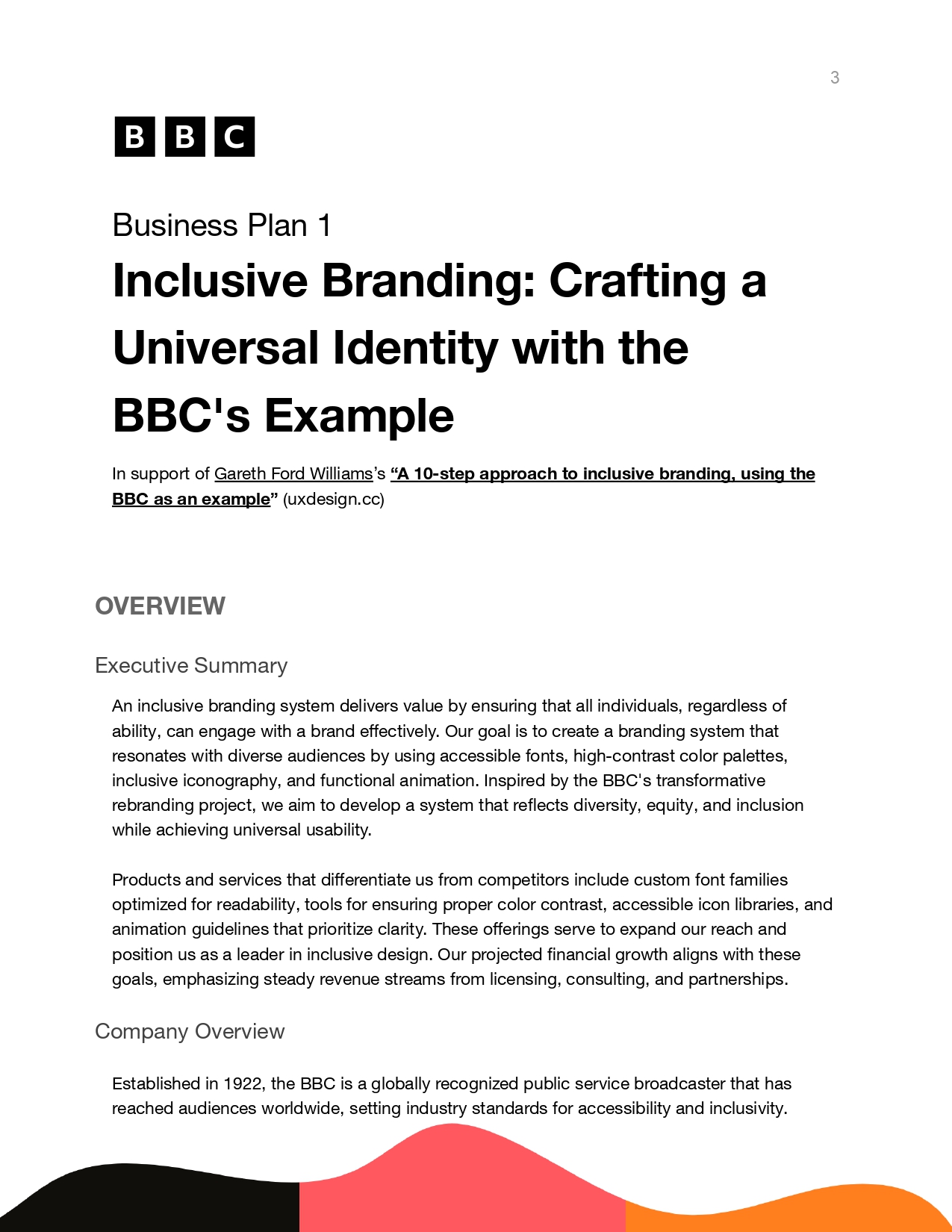
As a team, we reviewed three potential projects—Airbnb, BBC, and Headspace—and chose Airbnb based on problem clarity, measurable ROI, and familiarity with platform behavior.
Review our Business Plan Sketches here →
We voted anonymously to ensure fairness, and aligned around Airbnb’s clear use case and strong brand equity.
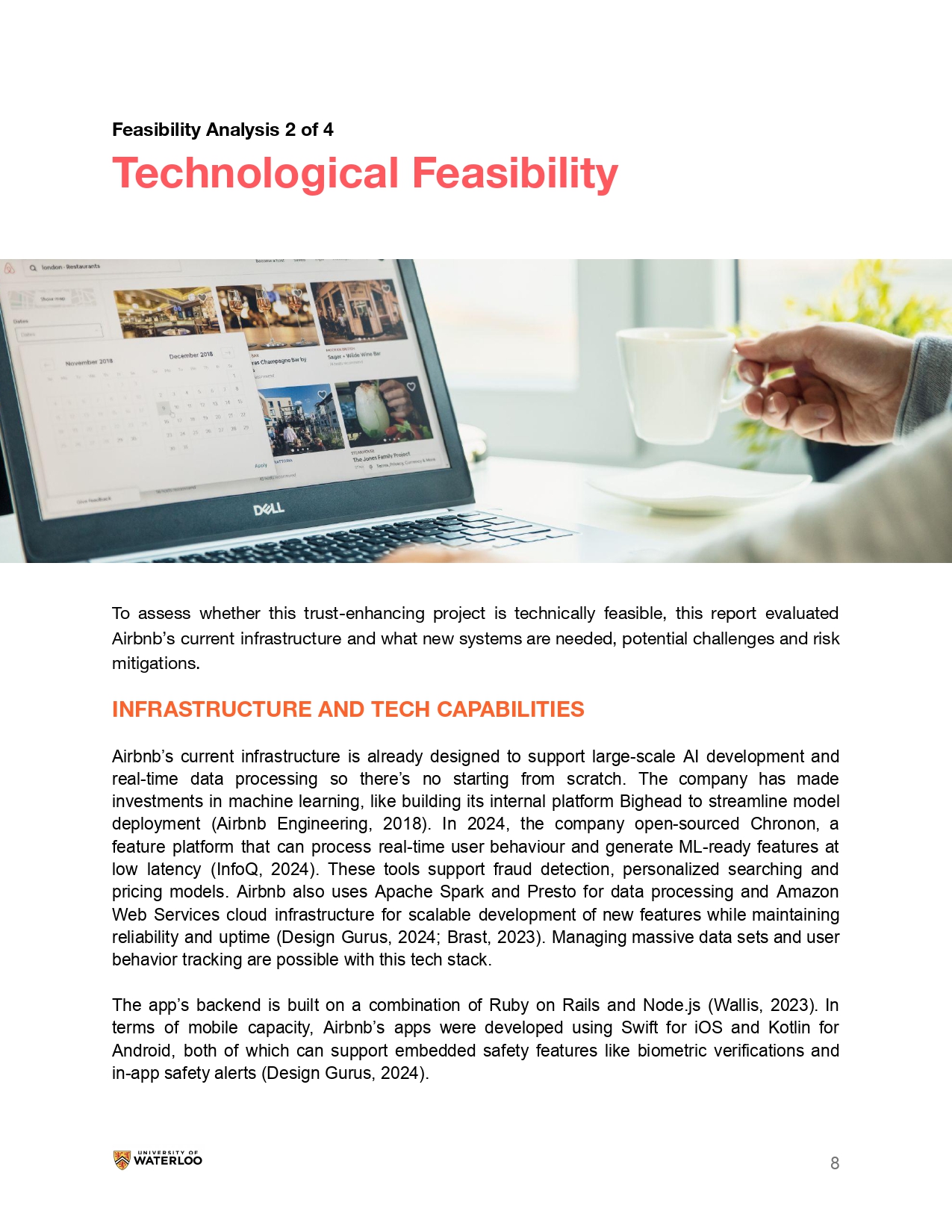
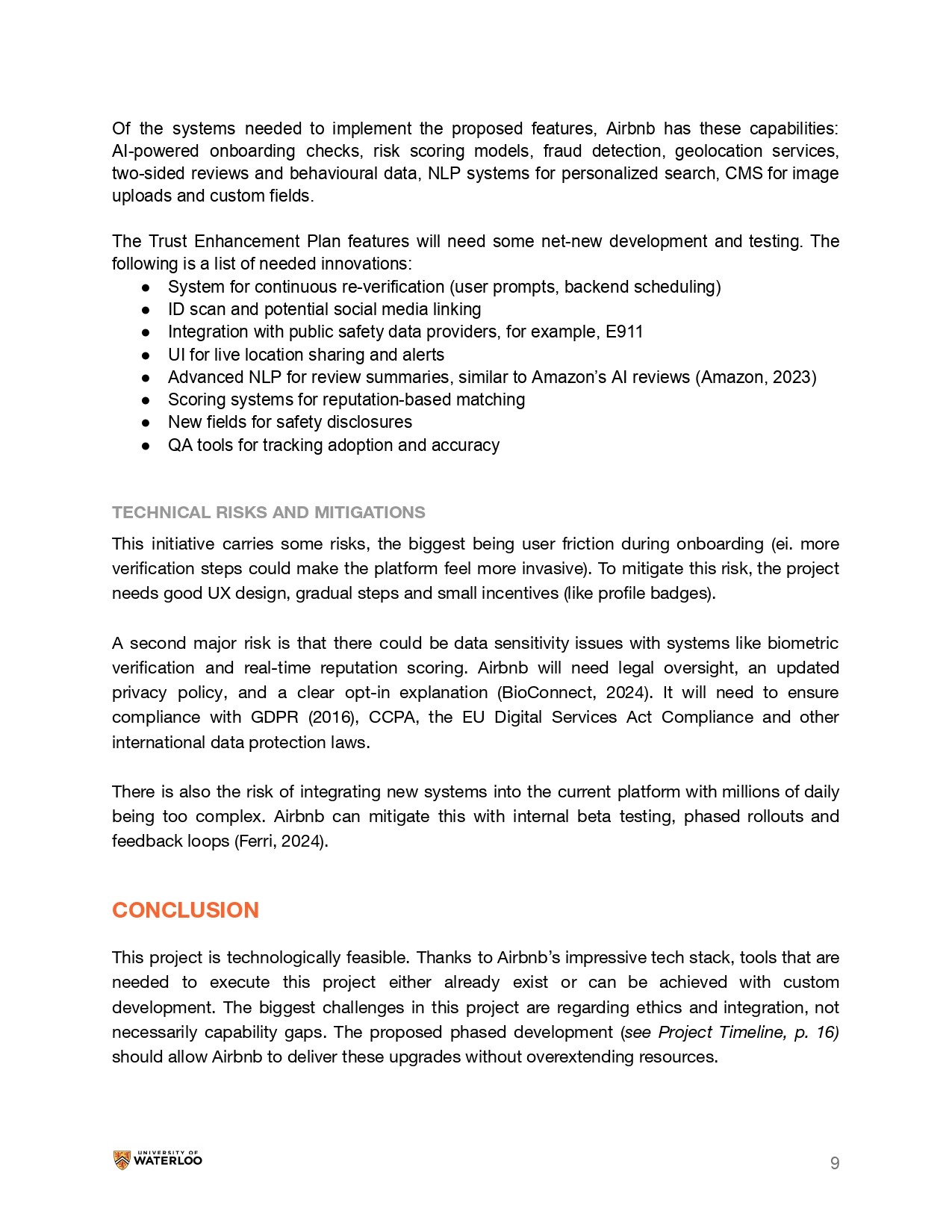
Throughout the process, I co-researched the technological feasibility analysis, reviewing Airbnb’s existing architecture (e.g., Bighead, Chronon, AWS, Swift, Kotlin, Ruby on Rails) and assessing risks such as data privacy and onboarding friction.
I also scoped out the study’s feature dependencies like social ID linking, live location tools, and embedded emergency check-ins.
Beyond research, I designed and formatted the deliverables, including the final Canva presentation and supporting documentation.
Our work was grounded in stakeholder value and technical realism, balancing ambition with feasibility.
Results
We presented our analysis and proposed rollout plan to faculty and received top-tier marks for both the quality of our research and the clarity of our recommendations. The Airbnb Trust Enhancement Plan was approved as fully feasible across all four areas—market, tech, financial, and organizational—with an estimated ROI of 261%.
The project sharpened our real-world product management skills, from technical scoping and stakeholder alignment to risk mitigation and cross-functional communication. Our final deliverables included a comprehensive feasibility report and a polished pitch deck designed for executive-level decision-making.
Gallery
You can also review our Business Plan Sketches document here.




 KSY, MDEI | YOUR FULL-STACK PRODUCT SPECIALIST