

2025 / Product (UX/UI) Design & Research, Prototyping, User Flows, Feature Scoping, Presentation Design

Role:
Product Manager / Lead Kiosk Designer /
Lead Presentation Designer
2025 (10 days)
- Initiated, created and managed Sprint Hub for research and task tracking
- Led kiosk UX/UI design in Figma
- Built user flows, wireframes, and hi-fi prototypes
- Designed and co-presented final deck in Canva.com
- Conducted market research and staff interviews
- Collaborated with sub-teams across devices
- Integrated user feedback into design iterations
Tools:
Figma & FigJam / Canva / The Internet
About the Study
In today’s fast-paced shopping environments, customers with specific needs—like dietary restrictions or a preference for Canadian-made goods—often find themselves overwhelmed, frustrated, and unsupported in-store. This project aimed to reimagine the in-person grocery experience with an intuitive, AI-powered wayfinding solution.
How might Loblaw create a seamless and engaging wayfinding system that empowers customers to efficiently locate and discover products in-store that align with their personal preferences?
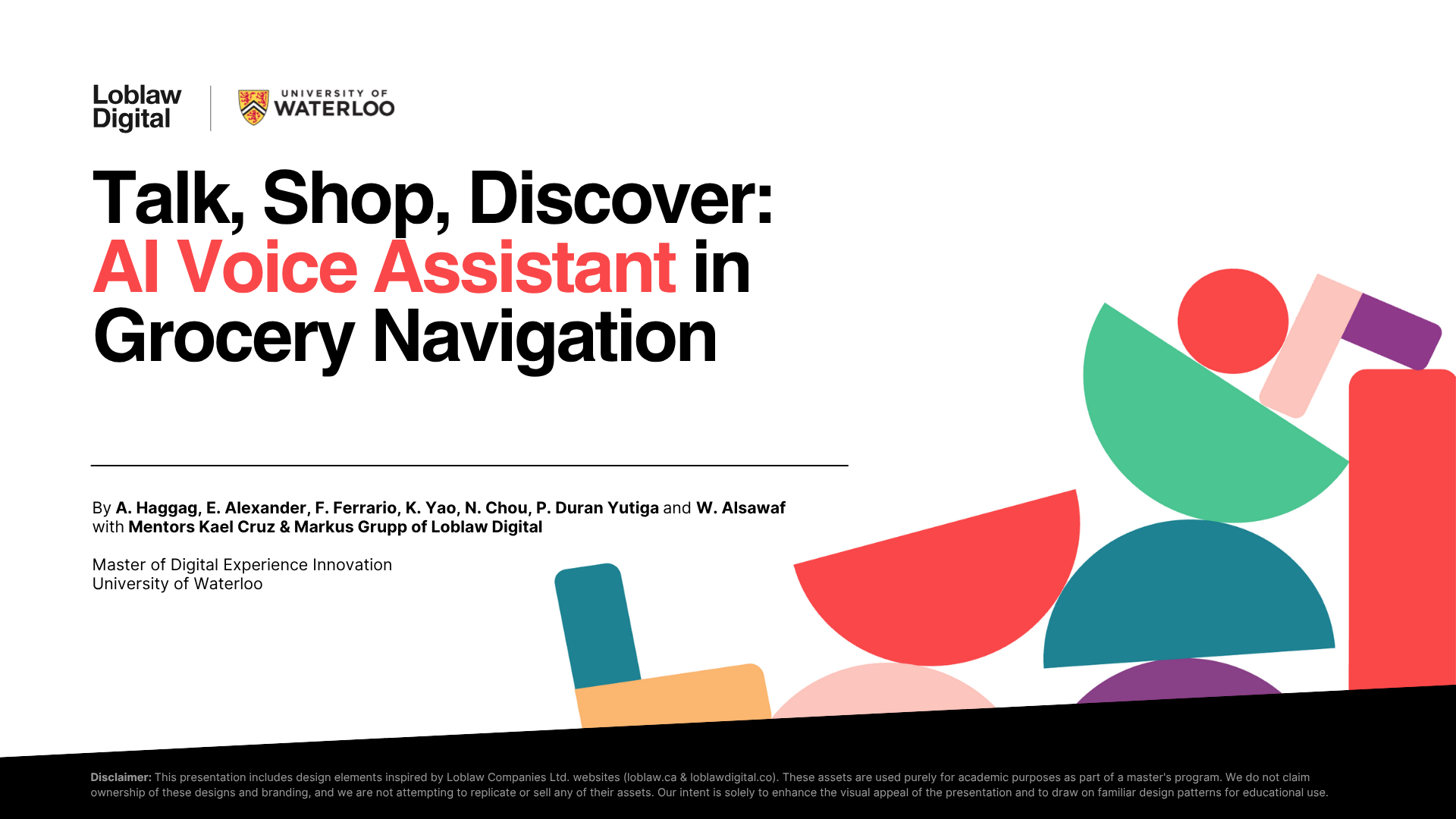
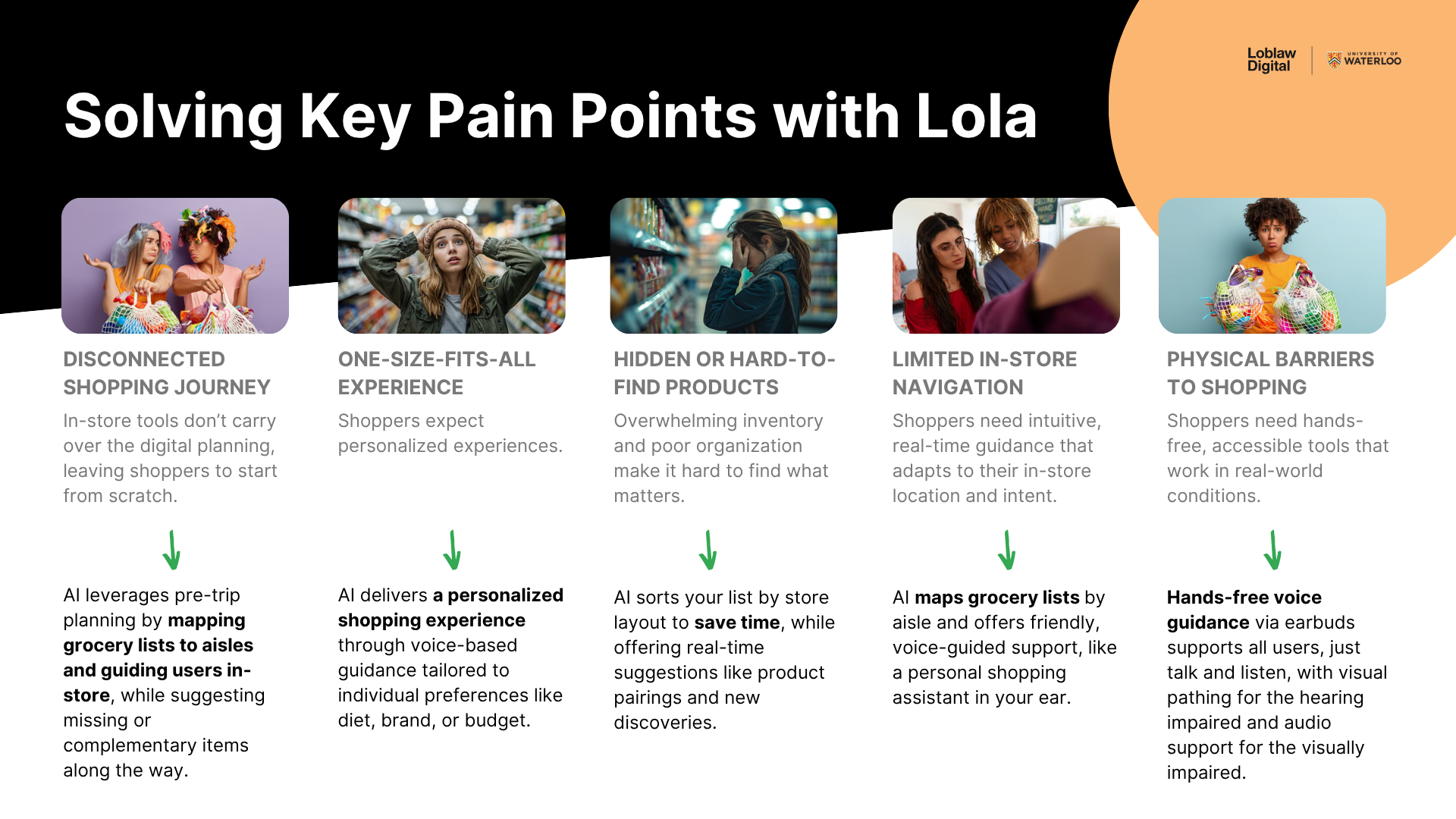
Our solution: Lola, an AI voice assistant accessible via mobile app and in-store kiosks. Lola guides shoppers in real-time, offering hands-free navigation, product suggestions, and tailored discovery experiences—without the need for new hardware.
This is an academic project for the Master of Digital Experience Innovation (MDEI) program at the University of Waterloo Stratford School of Interaction Design and Business. It was designed and delivered by a team of graduate students and presented to industry mentors from Loblaw Digital.

Behind-the-scenes
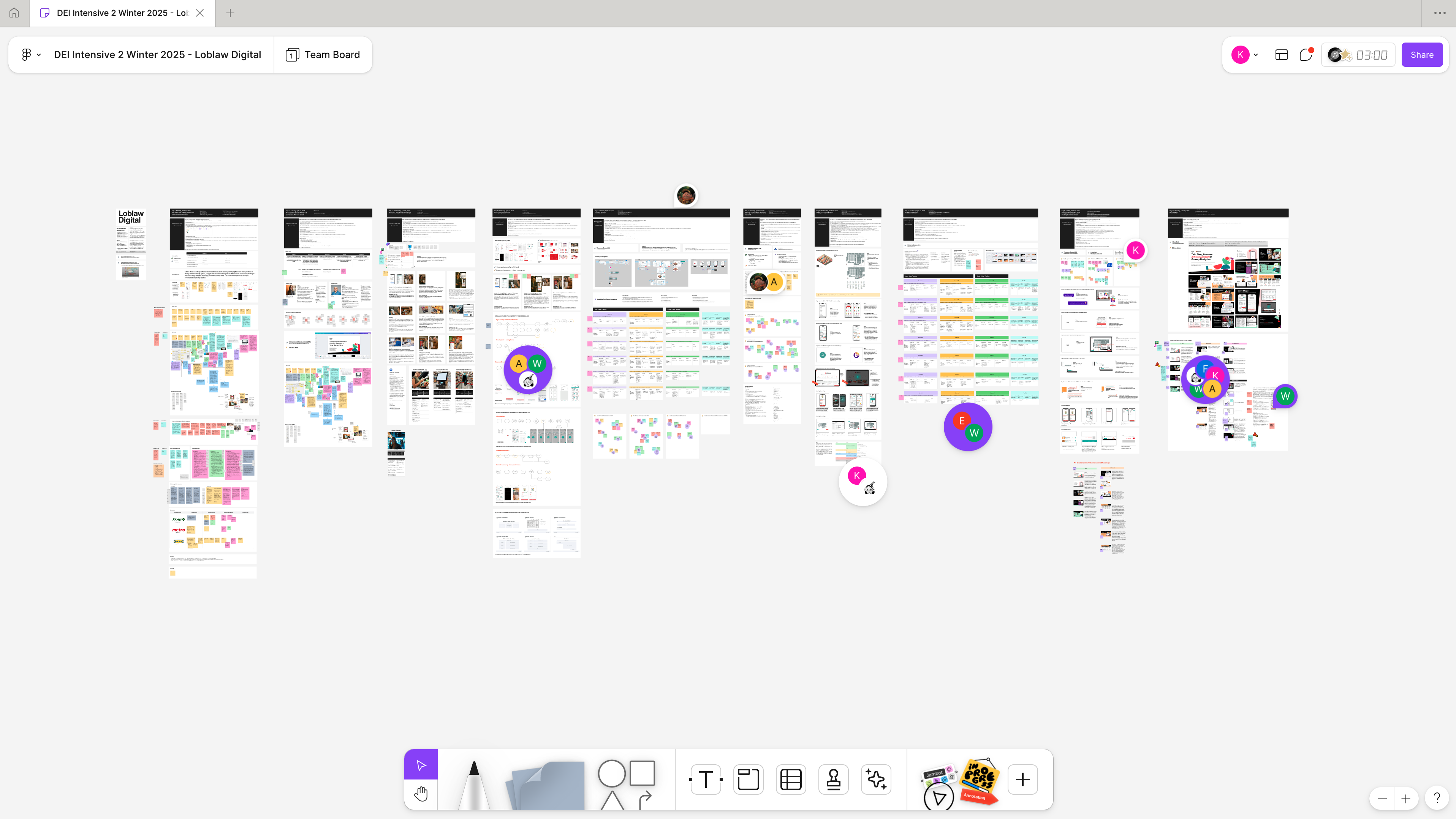
We were assigned to a real-world brief from Loblaw Digital and had just 10 days to go from insight to prototype. Each day was mapped to a different stage of the sprint: problem analysis, solution ideation, prototyping, user testing, and final presentation.
Research & Ideation
We began with desktop research and interviews with Loblaw staff at Loblaws, Shoppers, and Real Canadian Superstore. From that, we learned that shoppers often struggle with:
- Finding products quickly
- Limited staff availability
- Frequent product relocations
We brainstormed a wide range of concepts—from smart carts and AR overlays to robot helpers and wearable devices—before aligning around a scalable solution built on existing shopper behaviors.
Product Management
To keep the sprint organized and on track, I created and maintained our central Sprint Hub—a digital board that housed our research, daily updates, and task lists. It served as a shared space for accountability and collaboration. Each team member was responsible for contributing research findings, design assets, or test notes into the Hub every day, helping us track progress, avoid duplication, and ensure alignment across sub-teams. This structure was essential to keeping the 10-day sprint productive and focused.
Prototyping & Testing
We designed three core scenarios:
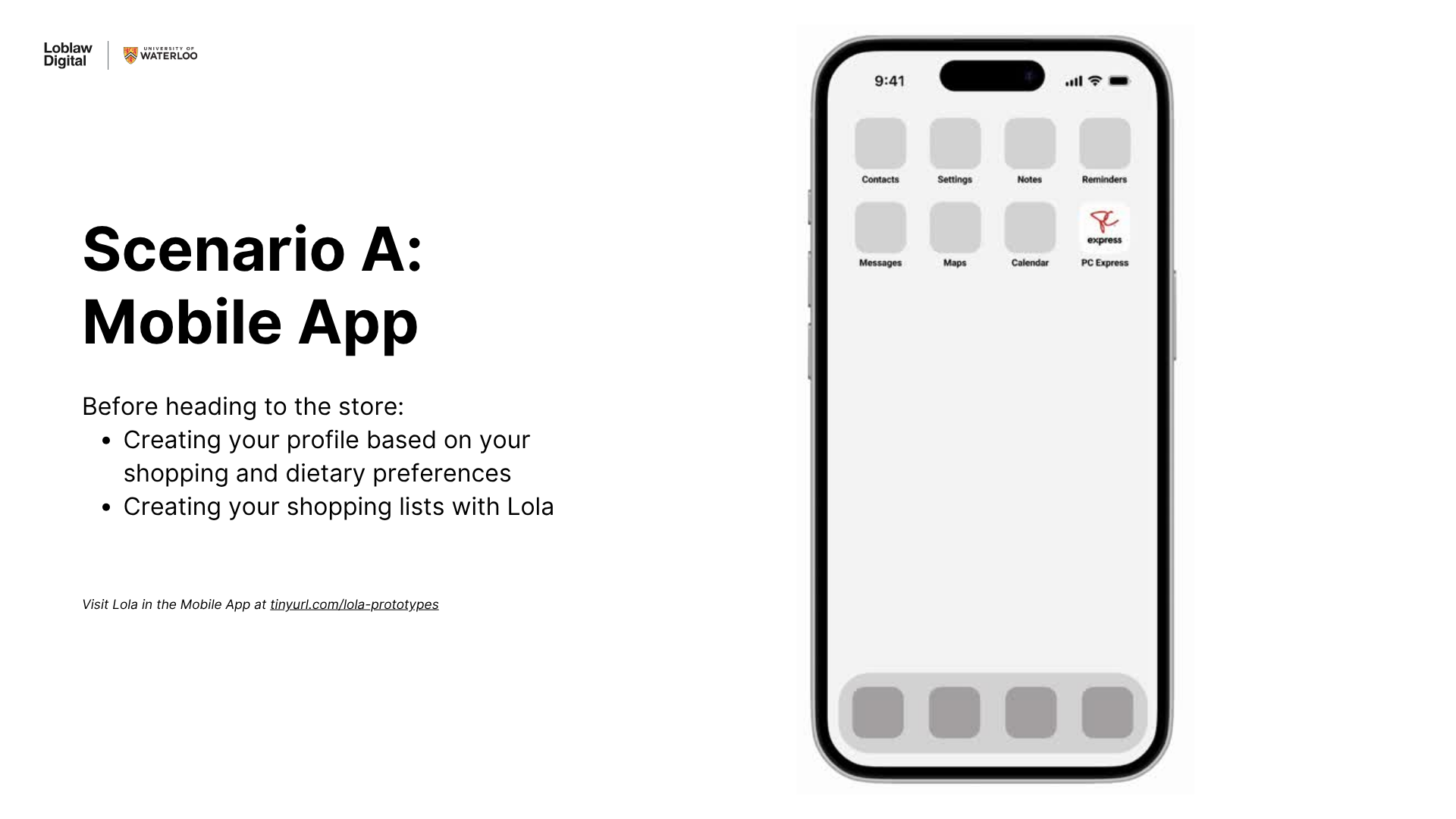
- Mobile App (Pre-Trip): Creating a profile and personalized shopping list
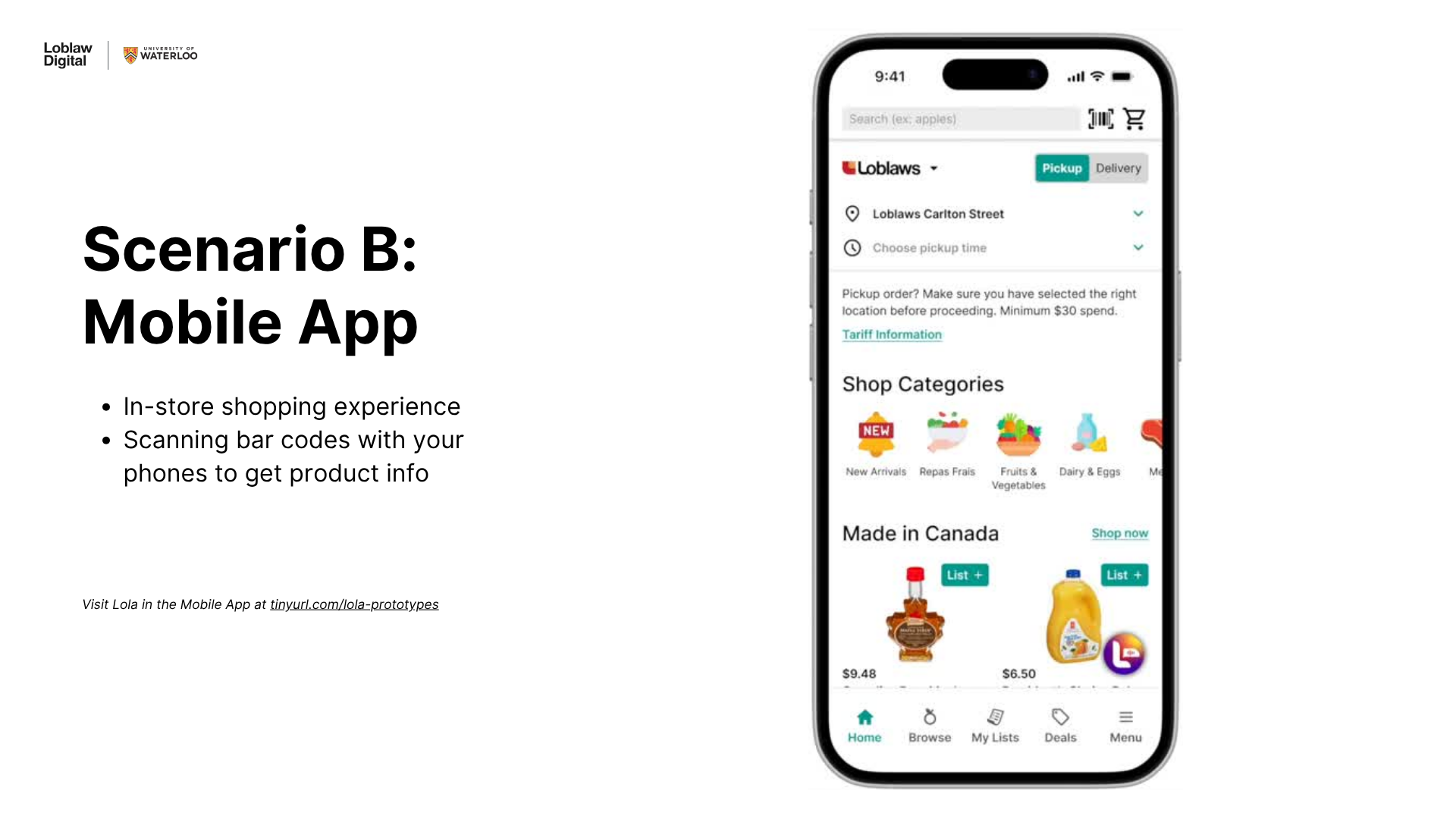
- Mobile App (In-Store): Using barcode scanning for product info
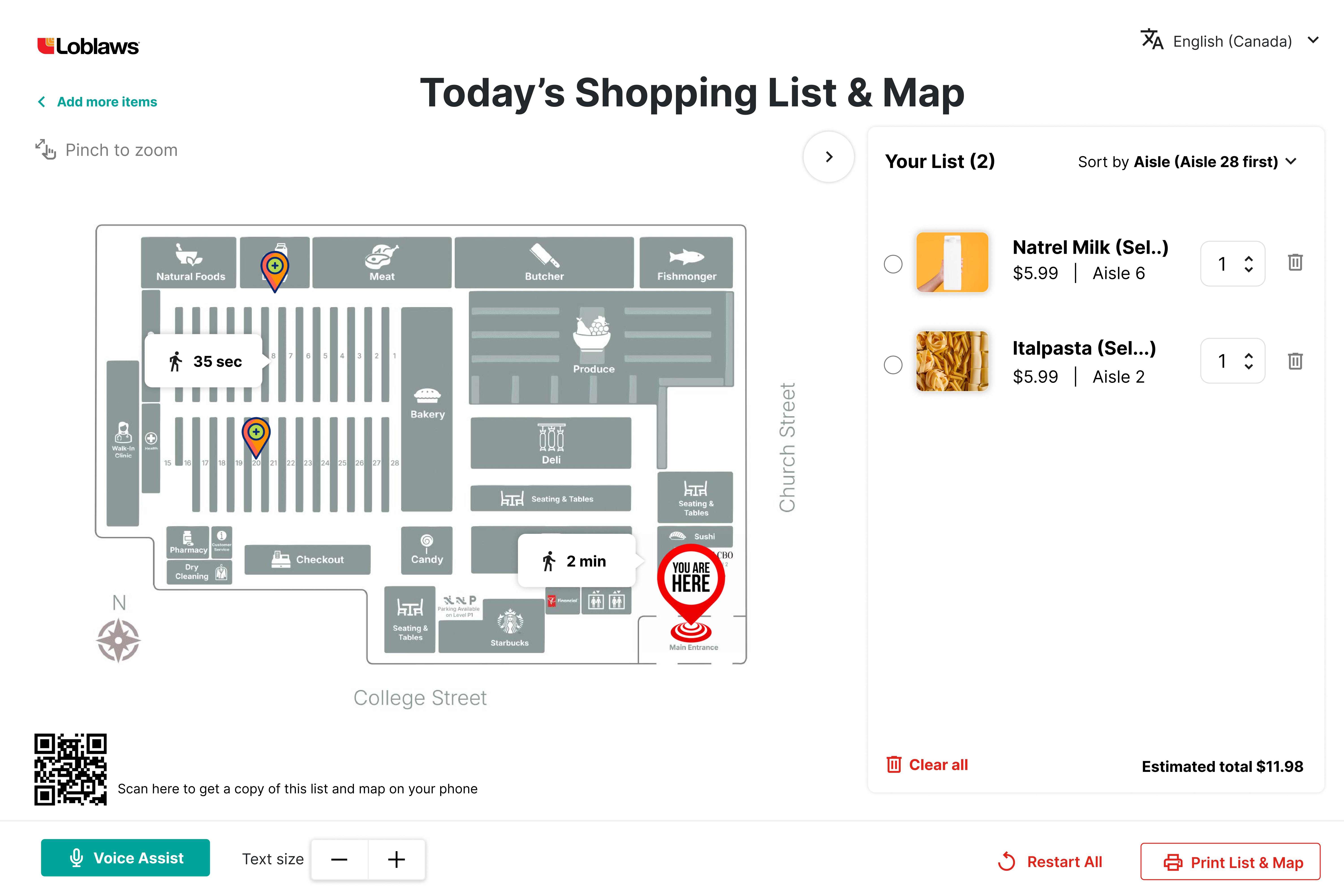
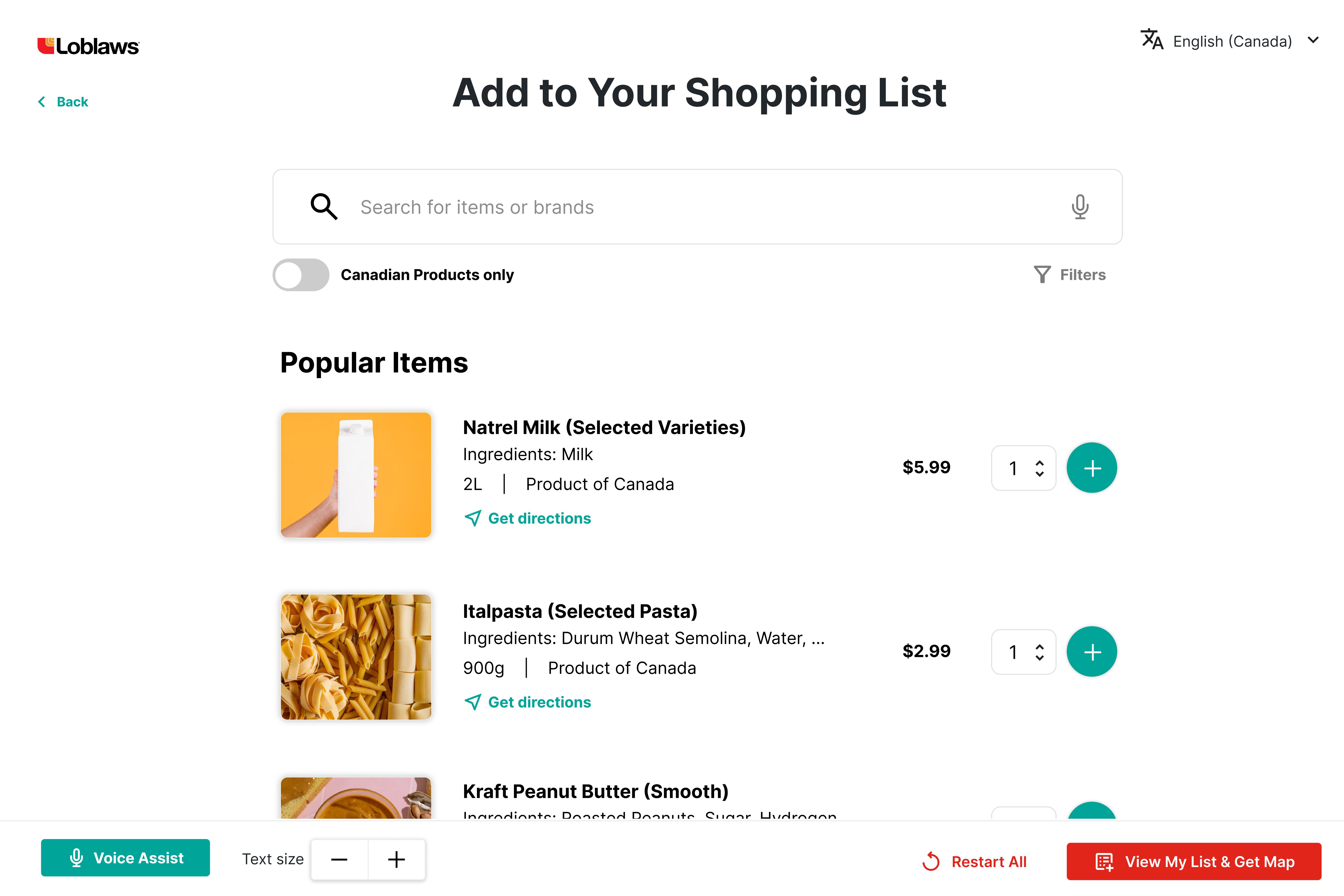
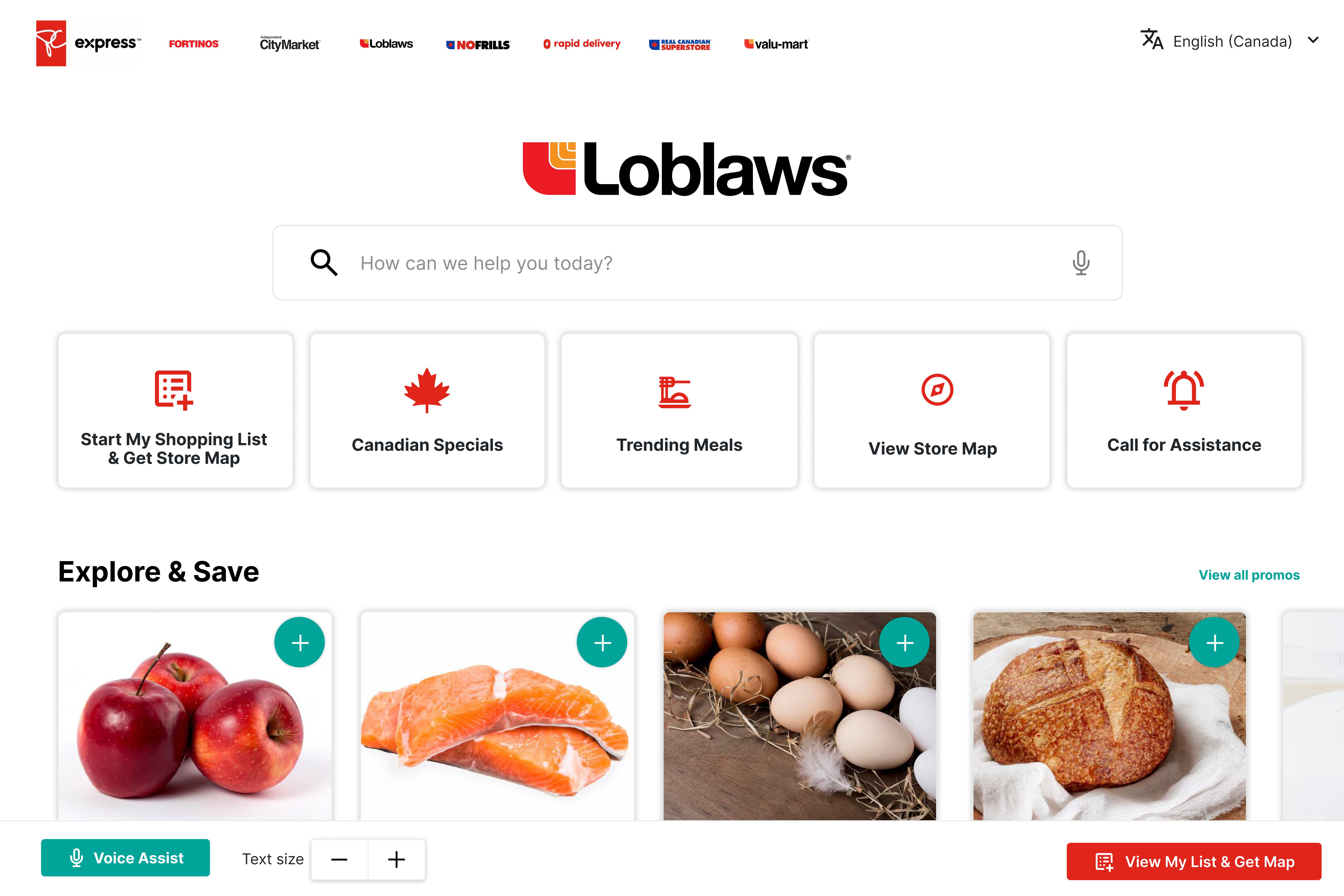
- Kiosk (In-Store): A non-member-friendly experience with list-building and printable store maps
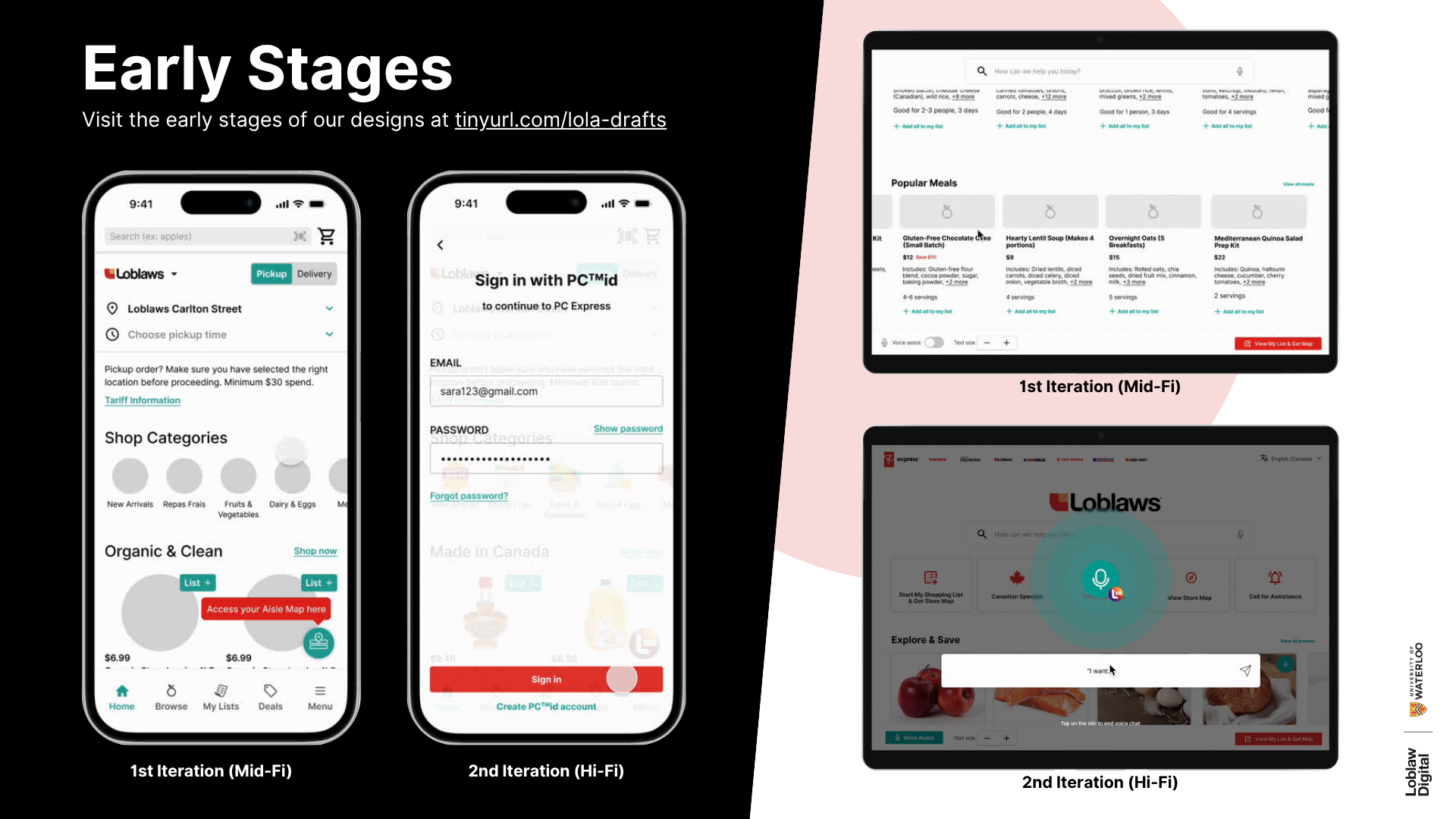
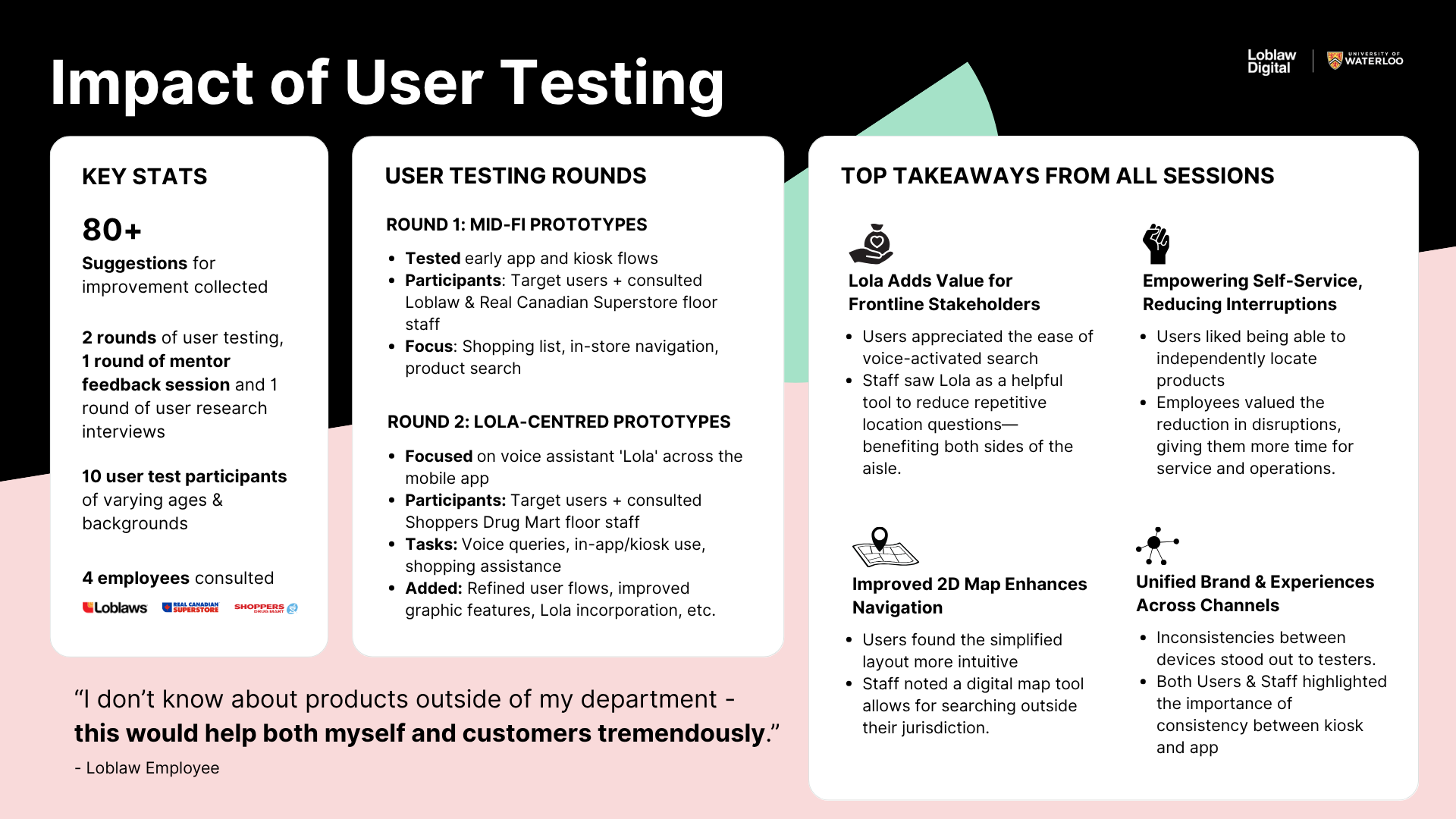
Prototypes were tested with users to validate flow, intuitiveness, and comfort with voice interaction. Feedback shaped refinements in tone, layout, and fallback interaction methods like touch input.
My Role
I acted as Product Manager and Lead Designer for the Kiosk experience. I helped drive strategic alignment across devices to ensure a cohesive, scalable solution.
Project Links




Results
Our final concept was well received by Loblaw Digital mentors Kael Cruz and Markus Grupp, and recognized by the audience for its clear path to implementation.
Quotes from Colleagues:

Key Takeaways:
- Voice assistance aligns with customer behavior and reduces friction in-store
- Planning tools that map shopping lists to aisles improve efficiency
- Kiosk availability ensures accessibility for all users, regardless of tech-savviness
- Clear onboarding and fallback inputs (like typing) are essential for broader adoption
We also identified critical considerations for real-world deployment:
- Privacy and data handling for offline kiosk users
- Staff and user onboarding to reduce friction and confusion
- Real-time inventory updates and accurate store maps to ensure reliability
- Flexible system architecture to support scalability across various store layouts
Ultimately, our work demonstrated the potential of AI-assisted in-store navigation—not just for improving convenience, but for reimagining what an inclusive and personalized shopping journey could look like.
Gallery




 KSY, MDEI | YOUR FULL-STACK PRODUCT SPECIALIST